Talked on Loggers and Continuous GW Monitoring
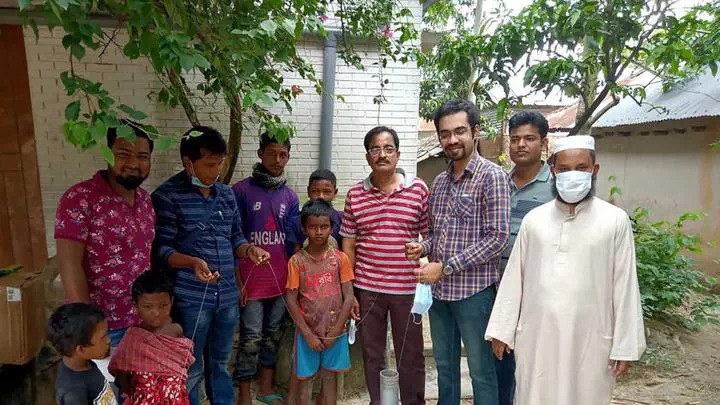 Image credit: DASCOH
Abstract
Barind tract is in challenged area in water and food security since past two decades. IWRM program of DASCOH took initiative to combat the situation. As this initiative, they installed loggers to groundwater monitoring and Mr. Suman Miah was responsible to monitoring the program.
Overview
The Bangladeshi NGO DASCOH Foundation has recently implemented a continuous groundwater monitoring program to help impoverished communities improve water security, sanitation and health.
Challenge
In the water-stressed region known as the Barind Tract, in Bangladesh, where the land is only 25 to 48 meters above mean sea level and the clay layer sits 5 to 20 meters below ground, life is “written in water” and communities face a genuine threat to their water and food security.
Drawing on local knowledge and resources to help vulnerable communities help themselves, the DASCOH Foundation is working to improve the area’s water management under the Bangladesh Water Act of 2013 and Bangladesh Water Rules 2018.
Solution
Under the Integrated Water Resources Management (IWRM) Project, funded by the Swiss Agency for Development and Cooperation and jointly implemented by the Swiss Red Cross and DASCOH, the foundation has been manually monitoring groundwater level in 50 wells in the Rajshahi, Chapainawabganj and Naogaon districts.
However, in September, the foundation worked with a regional distributor to install seven of In-Situ’s Rugged TROLL data loggers and one Rugged BaroTROLL for continuous groundwater monitoring. The data loggers offer an affordable, long-term monitoring solution and provide critical data on water level, pressure and temperature.
“DASCOH is a pioneer in the installation of modernized groundwater systems, and this is an important event for us,” says Mr. Suman Miah, a hydrogeologist and the IWRM monitoring officer responsible for the project. “The village people are most interested in the loggers and the ability to view the data on the computer and see how the water level changes over time.”
Results
With the new equipment in place, DASCOH is monitoring fluctuations in groundwater data each hour and comparing and correlating the information with historical data, a preliminary step that will support a full groundwater modeling project to follow.
The IRWM project already includes approximately 150 managed aquifer recharge (MAR) and rainwater harvesting (RWH) water-collection systems. Based on what the model shows, the Barind area could be formally designated as a “water-stress” area, and stakeholders will decide whether to install additional MAR and RWH interventions in order to increase water availability in the area.
The project is an important step in the effort to protect a critical resource. It also serves the organization’s broader mission to work with communities, local governments and other partners to help promote self-reliance and implement programs in support of safe water, sanitation, health and the alleviation of poverty.
“We are working with local government to strengthen its function and engage people in the community to manage the water,” says DASCOH Foundation CEO Mr. Akramul Haque.
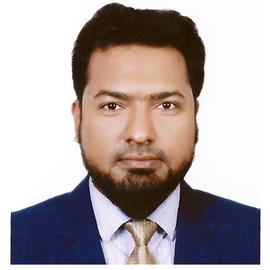
MD SUMAN MIAH
Environmental Specialist, Hydrogeologist, and Evaluation Practitioner
An Environmental Specialist with expertise in climate change impact and resilience, combining hydrogeology and data analytics to drive sustainable solutions in South Asia. Passionate about advancing environmental sustainability through research and community-centered projects.